
Your Guide to a Recording Room for Rent
- contact733797
- Aug 25, 2025
- 11 min read
Thinking about building a home studio? It's a massive project, and the costs for equipment and proper acoustic treatment can easily run into the thousands. There's a much more practical way to get that professional sound without draining your bank account or committing to a permanent setup: renting a recording room. It’s the perfect shortcut for taking your project from bedroom quality to broadcast-ready.
Why Renting a Recording Room Is Your Smartest Move
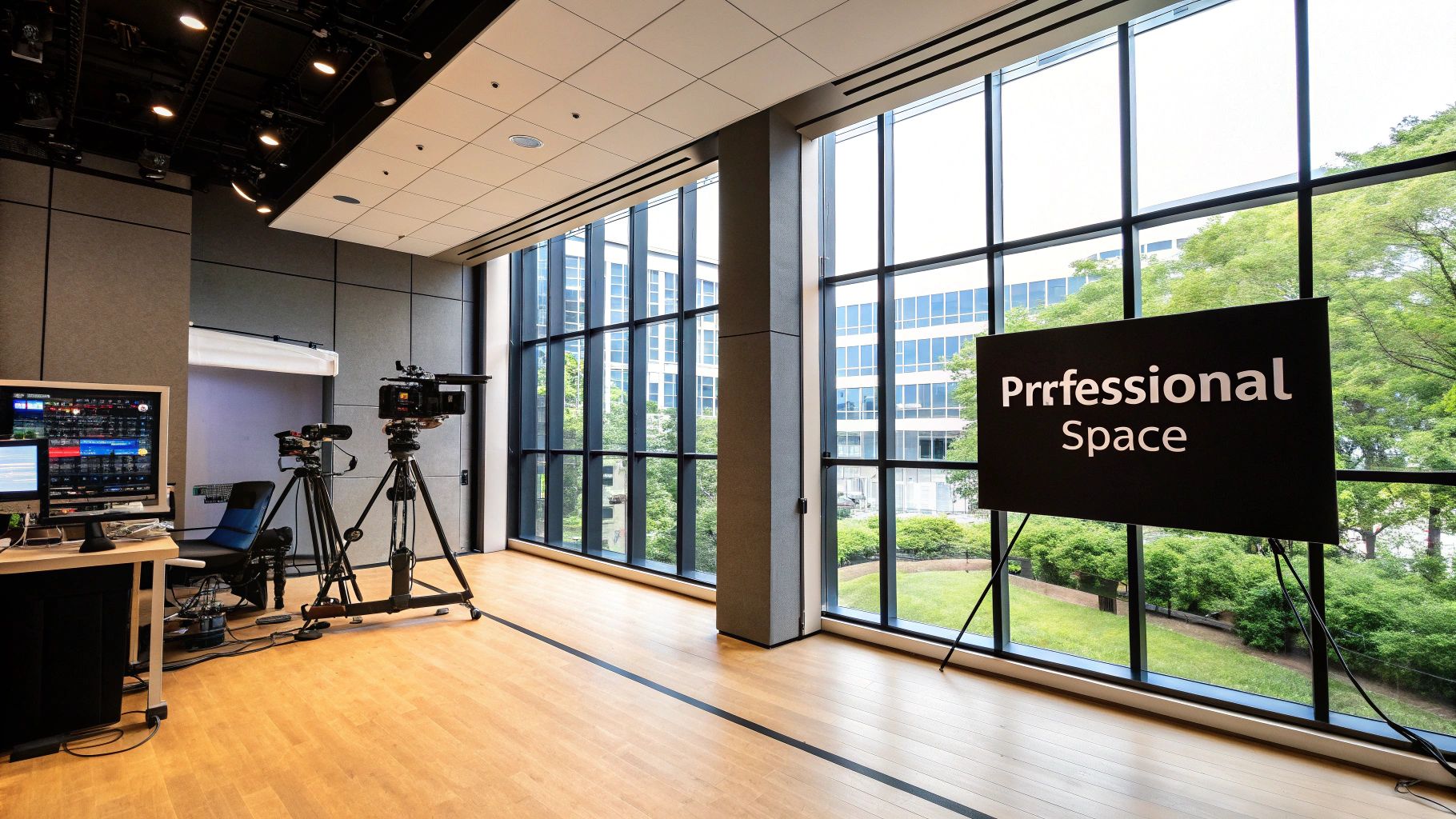
Picture it this way: instead of buying an entire gym, you just get a membership. Renting a studio gives you an all-access pass to a professional creative space. You're not sinking your entire budget into gear you might only use once or twice. You simply pay for what you need, exactly when you need it. This approach opens up high-quality production to everyone, whether you're a podcaster, musician, or content creator.
Let's be honest, setting up your own space is a technical nightmare. You have to worry about soundproofing, acoustic treatment, and a steep learning curve with all the gear. Professional studios have already solved these problems. They are meticulously designed to capture clean, pristine audio—something that's nearly impossible to achieve in a spare bedroom. That means you can finally stop fighting with background noise from the street or that annoying echo in your final mix.
Beyond just a quiet room, you get a whole package of benefits that make your life easier:
Professional-Grade Equipment: Get your hands on top-tier microphones, mixing desks, and software that would cost a fortune to buy outright.
Acoustically Perfect Environments: Record in a space that's been engineered for flawless sound, free from the weird reverb of an untreated room.
On-Site Expert Support: Many studios have in-house engineers or production managers who can help you get set up and troubleshoot any technical glitches.
Ultimately, renting a recording room frees you up to focus on what actually matters: your performance and your creativity. You can walk in, plug in your instrument or mic, and get straight to work, knowing all the technical stuff is already handled.
So, You're Looking for a Studio in Australia?
Trying to lock down a recording room for rent in Australia can feel like you're on a wild goose chase. Our creative scene is absolutely buzzing, which is fantastic, but it also means demand is sky-high. When you throw in a notoriously tight general rental market, you find that the best spots, especially in hubs like Sydney and Melbourne, get snapped up months in advance.
This isn't just a housing issue; that same pressure trickles right down into specialised spaces like studios. The numbers don't lie. A recent report pointed to a massive national shortage in rental listings, which has sent weekly rents for smaller spaces skyrocketing by 37% in just three years. That statistic alone shows why finding a recording room for rent that's both available and affordable has become a real strategic game. If you're curious about the bigger picture, the full UDIA State of the Land 2025 report really lays out these market forces.
What does this all mean for you? Well, planning ahead is no longer just a good idea—it’s essential. Those last-minute, spur-of-the-moment bookings are pretty much a thing of the past.
What Are Your Rental Options?
Once you start digging around, you'll see a few different ways studios rent out their spaces. Each model is built for different kinds of projects, schedules, and budgets. Figuring out which one works for you from the get-go will save you a heap of time and frustration.
Here are the main setups you're likely to come across:
Hourly Bookings: This is your bread and butter. It's the most flexible and common choice, perfect for knocking out a single podcast episode, laying down some vocal tracks, or filming a quick video. It’s a straightforward "pay for what you use" deal.
Package Deals: Got a bigger project in mind? Many studios will offer a better rate if you book a block of hours or a series of sessions upfront. This can be a smart move to save some cash when you’re recording a whole EP or an entire podcast season.
Long-Term Leases: This is the less common path for most creators, but some full-time artists or production houses will lease a space by the month or even the year. It gives you a permanent, dedicated home for your work, but obviously comes with a much bigger price tag and commitment.
For most people, sticking with hourly bookings or a package deal hits that sweet spot between getting professional quality and keeping costs manageable. It's the best way to get what you need without getting tangled up in the long-term rental market chaos.
What Gear and Help Comes with the Room?
When you book a recording room, you’re not just renting four walls. You're stepping into a space kitted out to help you create, with the essential gear already dialled in. At a bare minimum, any professional studio will have the core stuff sorted: high-quality microphones, audio interfaces, headphones, and—most importantly—proper acoustic treatment. That treatment is what ensures your sound is clean and crisp, not echoing around a bare room.
But these days, a lot of studios offer much more than just the basics. It's pretty common now to find spaces with multi-camera setups for video podcasts, professional lighting rigs, and even green screens for those bigger visual projects. Think of it less like hiring an empty office and more like getting the keys to a fully-stocked creative toolkit for a few hours.
This breakdown shows the foundational features you should be looking for.
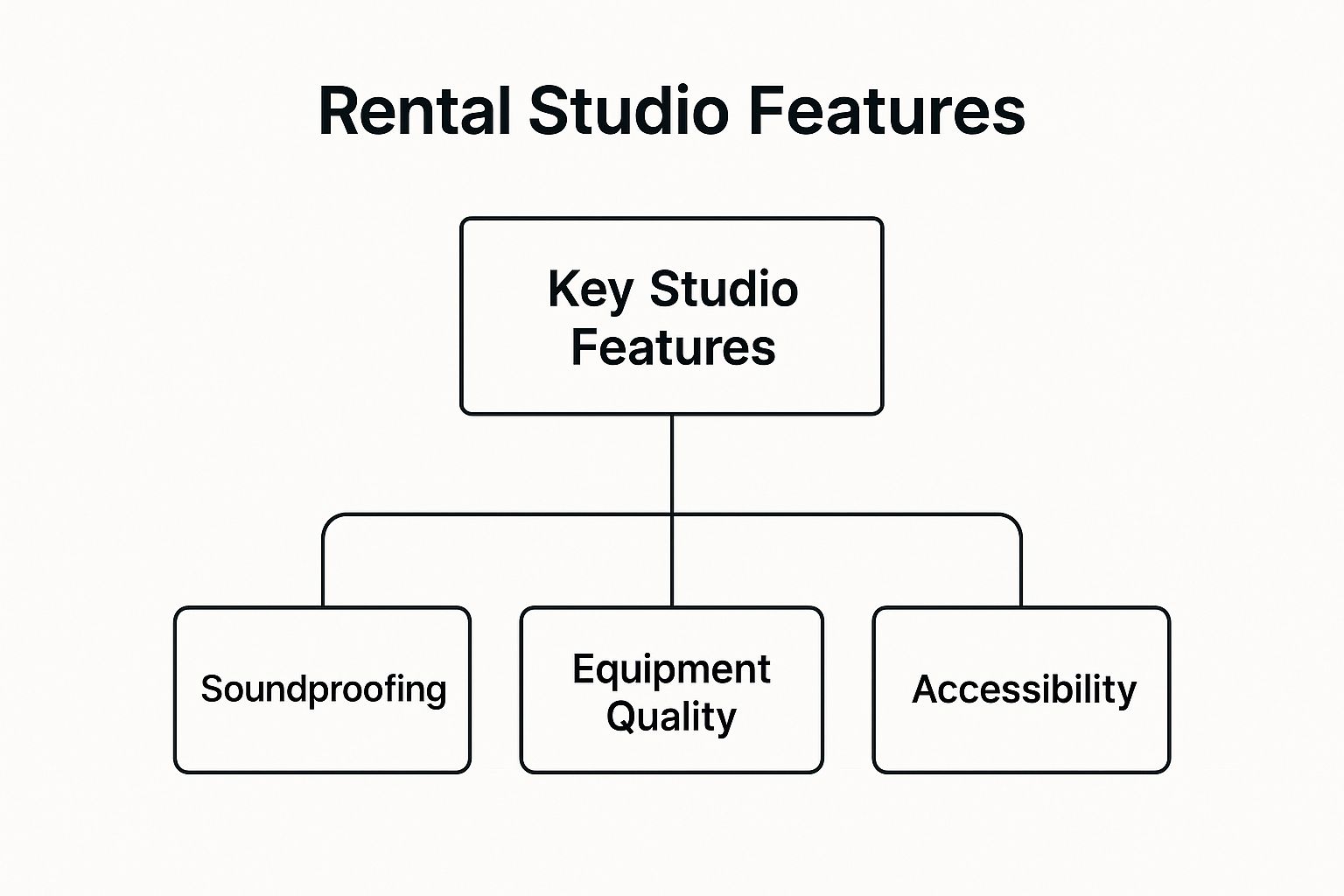
As you can see, solid soundproofing and quality equipment are the bedrock of any studio worth your time, with accessibility being a huge plus for a hassle-free session.
Typical Studio Features at a Glance
To give you a clearer picture, here’s a quick comparison of what you can typically expect to find in different types of recording rooms. It helps to know what’s standard so you can pick the right space for your specific project.
Feature | Vocal/Solo Podcast Booth | Music Production Room | Video Podcast Studio |
|---|---|---|---|
Microphones | 1-2 condenser mics | Multiple dynamic & condenser mics | 2-4 broadcast-style mics |
Audio Interface | 2-channel interface | Multi-channel interface | Mixer/Audio interface |
Acoustic Treatment | Heavily treated for isolation | Balanced treatment (diffusion & absorption) | Treated for clear dialogue |
Video Gear | Usually none | None | 2-3 cameras, basic lighting |
Monitoring | 1-2 pairs of headphones | Studio monitors & multiple headphones | Headphones for all guests |
Best For | Voice-overs, audiobooks, solo podcasts | Songwriting, beat making, mixing | Interviews, multi-person shows |
This table is a general guide, of course. The best studios will always list their specific gear, so be sure to check that before you book.
On-Site Help and Extra Services
Maybe the biggest perk of renting a professional space is the human element. The best creative hubs often feel like a concierge service for your project. Don't have your own videographer? They'll likely have a few pros they trust and can recommend. Not sure how to get the lighting just right? There's often an on-site manager who can jump in and help.
The whole idea is to create a ‘plug-and-play’ experience. You should be able to walk in with an idea and walk out with a polished product, knowing there’s support to fill any gaps in your own crew or skillset.
This kind of hands-on support can be a real game-changer. For a musician, it might mean having an audio engineer on hand to help get that perfect guitar tone. We touch on just how valuable this is in our guide to finding the best music rehearsal space in Melbourne. For a podcaster, it could be getting help with post-production editing to chop up your session into ready-to-go social media clips.
Before you lock anything in, always ask what level of support is included with your booking.
Getting to Grips with Studio Hire Costs
Let's cut to the chase: how much will hiring a professional studio actually set you back? When you start looking for a recording room for rent, you'll find there’s no single answer. The price you see is a blend of different factors, each one tweaking that final hourly rate.
Think of it like booking a hotel. You wouldn't expect a luxury suite in the CBD to cost the same as a basic motel room on the city fringe. It’s the same deal with recording studios—a premium location, top-shelf gear, and the sheer size of the space all play a big part in the cost.
It’s also worth remembering that Australia's music and sound recording industry is a big deal, currently valued at around AUD 1.0 billion and still climbing. This high demand for quality spaces naturally pushes up the price. As a result, you’ll typically see hourly rates in Australia falling somewhere between AUD 60 to AUD 180, a figure that reflects both the quality of the gear and the competitive market. You can dig deeper into the Australian sound recording industry on IBISWorld.
What's Behind the Price Tag?
So, what are you actually paying for? Knowing the key variables will help you find a studio that gives you the best bang for your buck.
The Gear: A studio packed with industry-standard microphones, a top-tier mixing desk, and sought-after software will naturally cost more than one with a more basic setup. You're paying for access to professional tools.
Location & Space: Studios in major city hubs have higher running costs, and that gets passed on. A larger room built to accommodate a full band will also be pricier than a small, purpose-built vocal booth.
Expert Help: Does the hire fee include an experienced audio engineer or producer? Having a pro on hand to guide your session is incredibly valuable, but it will be factored into the price.
Booking Duration: Most studios will give you a better deal for longer bookings. A full-day lockout is almost always cheaper per hour than just grabbing a single hour here and there.
How to Make Your Budget Go Further
Working with a tight budget doesn't mean you have to settle for poor quality. A little forward planning can help you get professional-sounding results without breaking the bank.
If you’re working on a larger project, like an EP or a podcast series, always ask about package deals. Booking your time in bulk can lead to some pretty decent savings.
It’s also a good idea to enquire about off-peak discounts. Some studios offer lower rates during quieter times, like weekday mornings or late-night sessions, when the rooms are less in demand.
How to Make the Most of Your DIY Studio Experience
When you book time in a recording room, every minute is gold. The best way to walk out with a final product you're genuinely proud of is to do the heavy lifting before you even walk through the door. Remember, the clock starts ticking the second your session begins, not when you finally feel ready to hit record.
Come prepared with a solid, actionable plan. This means having your scripts finalised, your guests confirmed, or your song structures completely mapped out ahead of time. Think of it like a chef doing their mise en place—the more you prep your ingredients beforehand, the smoother and more creative the cooking process will be. A little forethought is often the only thing separating a frantic, rushed session from a focused, productive one.
Lean on the On-Site Expertise
One of the best things about modern creative hubs is the 'DIY with support' model. You're in control, but an expert is always on hand to help out. You don't need to be a master of everything; that's literally what the studio team is there for. Their job is to fill in the knowledge gaps so you can concentrate on what you do best: creating.
The most successful studio sessions happen when creators aren't afraid to ask for help. Whether it's a quick tutorial on the podcasting gear or advice on lighting a cyclorama wall, on-site production managers are there to ensure you get the best possible result.
This support system is built to make professional-grade tools accessible to everyone. If you’re not quite sure how to set up a specific microphone or need a hand navigating the mixing desk, just ask. Tapping into this on-site knowledge is one of the smartest ways to elevate your project. For more tips, check out our detailed guide on how to make the most of your recording studio hire.
For instance, at That Creative Hub, our spaces are designed to be plug-and-play, but we’re always here to support you behind the scenes. If you're using our Cyclorama Studio, you can bring your own team or we can connect you with a trusted photographer or videographer. For podcast users, our fully-equipped set comes with a dedicated production manager on-site to help adjust the layout and vibe to suit your vision. Can’t get a crew together? We act as a concierge service for creators, linking you with the right people and tools to bring your vision to life.
Choosing the Right Recording Room for Your Project
So, you’re ready to lock in a studio. The big question is, how do you sort through the options and make the final call? The secret isn’t about finding the single “best” studio out there; it’s about finding the one that’s the perfect match for your project.
Think of it as a simple process of elimination. A few pointed questions can help you cut through the noise and zero in on the space that will bring your creative vision to life.
Your Pre-Booking Checklist
Before you put any money down, it’s worth running through a quick mental checklist. Getting clear on these points will make sure the studio you choose is a genuine asset, not a hurdle.
What’s my number one priority? Are you chasing that perfectly captured, broadcast-quality vocal for a new song? Or is the visual vibe more important for your next video podcast episode? Your main goal should be the compass that guides your decision.
What's my hard budget limit? Be honest with yourself about the total cost you can afford, factoring in more than just the hourly rate.
How much help will I need on the day? Can you confidently walk in and run the gear yourself, or would having an experienced engineer or a production manager on hand make all the difference?
Is the location practical for everyone involved? Don't forget the simple logistics. Easy access and reasonable travel time for you and any guests can set the tone for a relaxed, productive session.
Thinking this through ensures you book a space that truly works for you. For an even more detailed breakdown, have a look at our guide to the perfect studio recording room.
It's also worth remembering that the wider rental market in Australia has seen some big shifts in pricing, with median rents on the rise. This naturally has a knock-on effect for specialised spaces like studios, which makes finding a place that delivers real value for your money more important than ever. You can read up on these broader trends over at the Australian Bureau of Statistics.
Frequently Asked Questions
Before you jump into your first session, it's natural to have a few questions. To help you get sorted, we've put together some answers to the things people most often ask us.
Question | Our Answer |
|---|---|
Do I need to bring my own equipment? | Generally, no. Our recording rooms for rent come kitted out with the essentials like microphones, audio interfaces, and headphones. That said, you'll always want to bring your personal gear like your laptop, specific instruments, or a hard drive for your files. It's always a good idea to check the studio's equipment list before your session just to be sure. |
Is an audio engineer included? | This really depends on the studio and the package you choose. Some rental rates might include an on-site manager or engineer to help you get set up. For others, it’s an optional add-on for an extra fee. If you think you’ll need a hand with the technical side of things, it’s best to ask about this when you book. |
How far in advance should I book? | We suggest booking at least one to two weeks ahead, particularly if you're eyeing a popular evening or weekend slot. The best studios can get booked out a month or more in advance, so a little planning goes a long way in securing the time that works for you. |
Hopefully, that clears a few things up and helps you feel more prepared for your session!
Ready to create without compromise? Book your next session at That Creative Hub and get access to a professional, plug-and-play environment designed to bring your vision to life. Book now
Comments