
Melbourne Photography Studio Hire | Perfect Your Creative Space
Picking the right Melbourne photography studio hire is about so much more than just finding a room with a roof. Think of it as finding a creative partner—a space that doesn't just accommodate your vision, but actively enhances it. The goal is to find a studio that lets you focus on your craft, with all the right tools and atmosphere already in place.
Finding Your Perfect Creative Space in Melbourne
Before you even start looking, you need to match the studio to your project. Melbourne’s creative scene is packed with options, from massive commercial warehouses to intimate, sun-drenched lofts. Your first task is to figure out exactly what you need so the space works for you, not against you.
The city's photography industry is booming, which is great news for creatives. For example, a major player like The Photo Studio Australia reported a massive 125% jump in its employee numbers in just one year. That tells you there’s a huge demand for professional photo services, and thankfully, a growing supply of quality studios to meet it.
Different Studios for Different Visions
Not all studios are built the same, and that's a good thing. The perfect choice really hinges on the look and feel you're trying to capture.
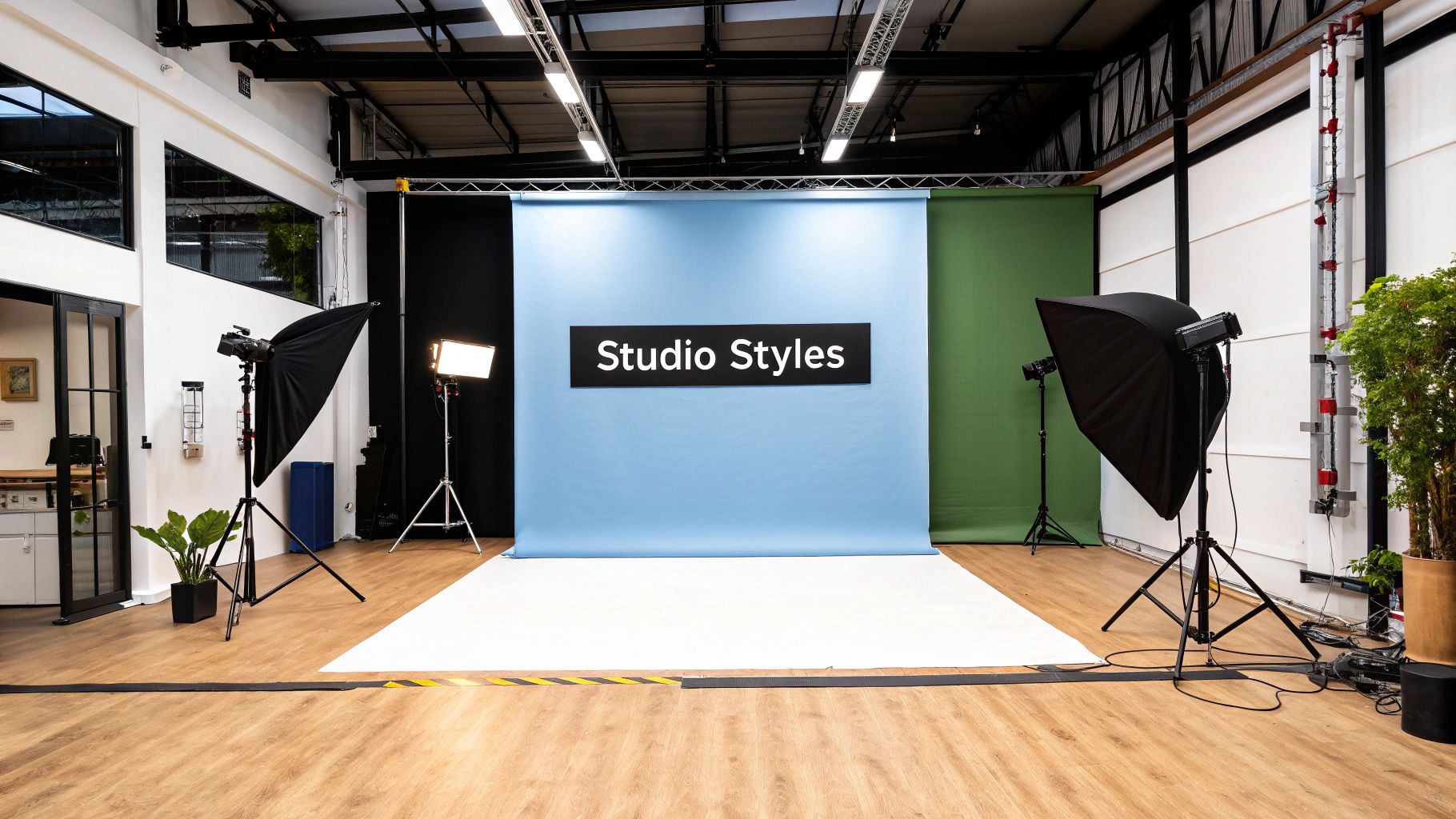
Cyclorama (Cyc) Studios: This is your classic blank canvas. With a seamless, curved wall that creates an 'infinite' background, a cyc studio is the industry standard for e-commerce, fashion, and product photography. It gives you complete control over lighting and makes isolating your subject a breeze.
Pre-Styled or Themed Studios: If you're shooting lifestyle content, portraits, or branding material, these spaces are a dream. They come with curated furniture, props, and unique backdrops, giving you an instant vibe without the hassle of set design. You just show up and shoot.
Natural Light Studios: Characterised by huge, beautiful windows, these studios are perfect for creating that soft, organic feel. They're fantastic for portraits, food, and lifestyle shoots, but be warned: you're working on the sun's schedule, so timing is everything.
To help you narrow it down, here's a quick look at how these studio types stack up.
Melbourne Studio Types at a Glance
Studio Type | Best For | Key Feature | Typical Cost Guide |
|---|---|---|---|
Cyclorama (Cyc) Studio | E-commerce, fashion, product | Seamless "infinite" background | $80 - $200+ per hour |
Pre-Styled/Themed Studio | Lifestyle, portraits, content | Curated decor and props | $100 - $300+ per hour |
Natural Light Studio | Portraits, lifestyle, food | Large windows, soft light | $70 - $180+ per hour |
This table should give you a starting point, but always dig deeper into what each specific studio offers before you book.
Key Factors to Consider
Once you've settled on a type of studio, it's time to get into the nitty-gritty. How easy is it to get to? Think about your team, your talent, and your clients. Ample parking or proximity to public transport can make a huge difference to everyone's day.
Then there are the amenities. Don't underestimate the power of a dedicated makeup station, a comfy client lounge, or reliable high-speed Wi-Fi. These small details are what separate a good shoot day from a great one. They add a layer of professionalism and keep things running smoothly.
Key Takeaway: The best studio isn’t just a location. It’s a complete package of the right environment, essential tools, and a support system designed to help you execute your creative vision without a hitch.
This chart breaks down some of the key numbers in the Melbourne studio hire market, like average rates and popular booking lengths.
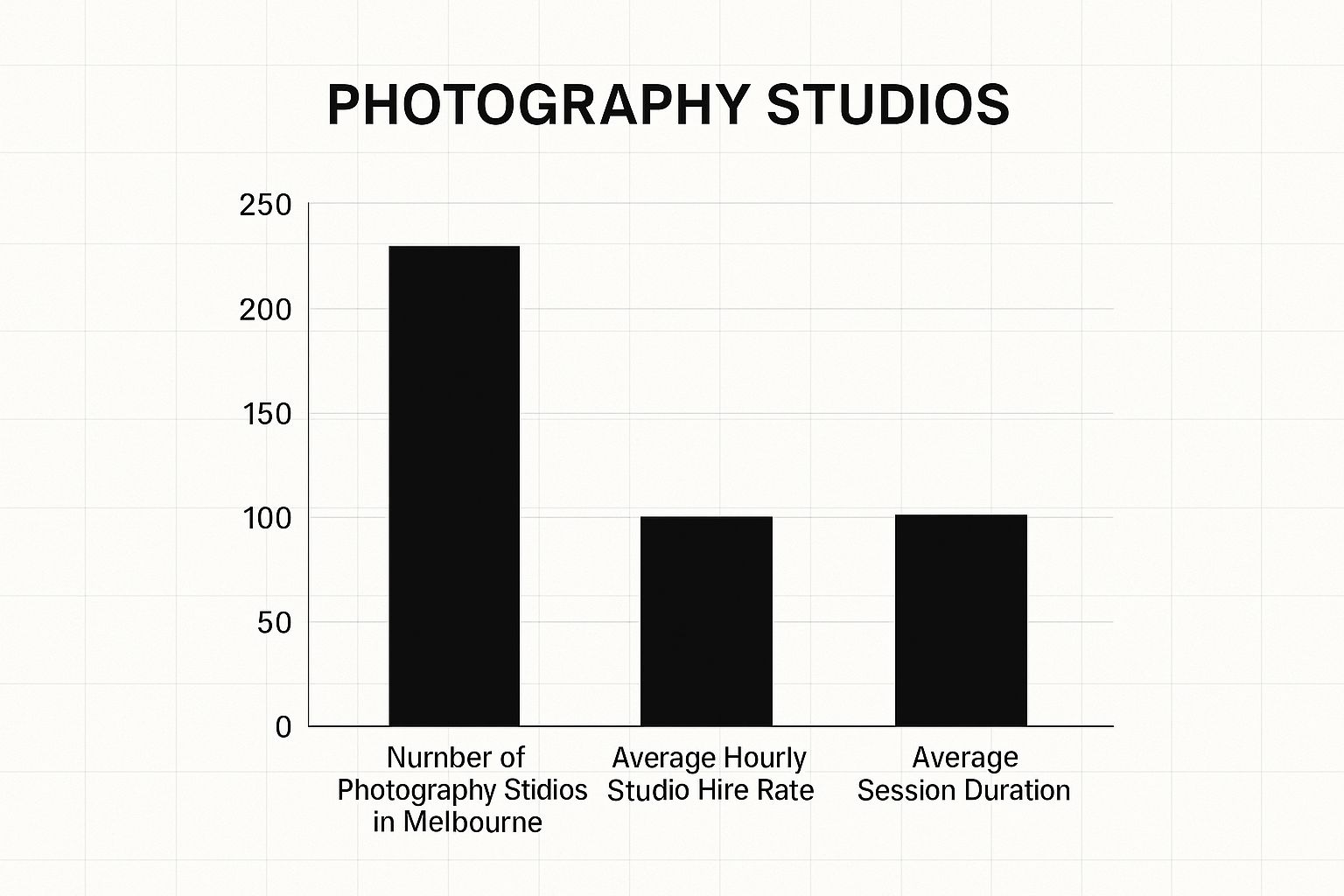
As you can see, the market is pretty competitive. While the hourly rates might seem accessible, the data shows that many photographers book longer half-day or full-day sessions. It's often better value and gives you the breathing room you need to get the job done right.
Getting to Grips With Studio Equipment and Amenities
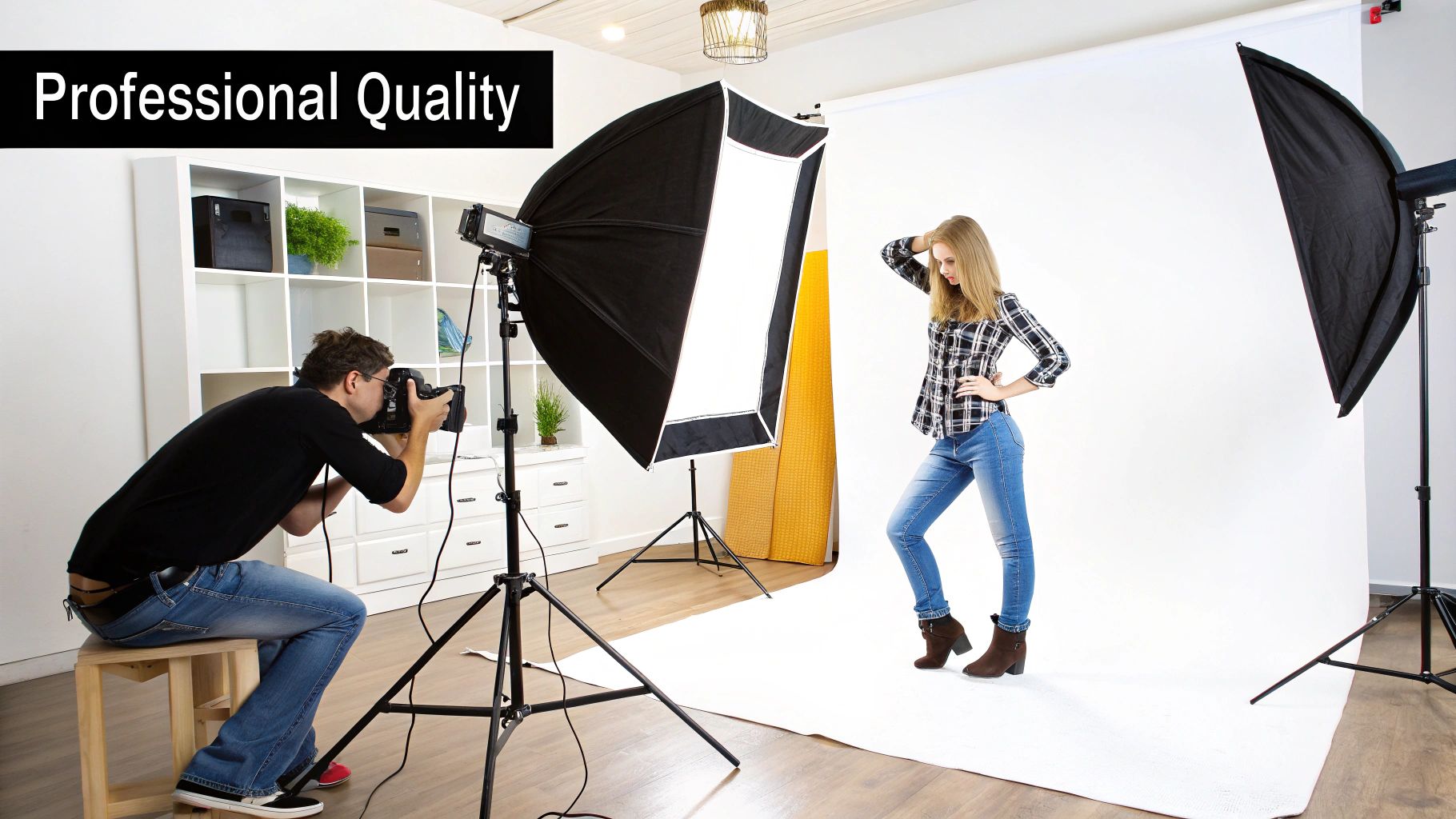
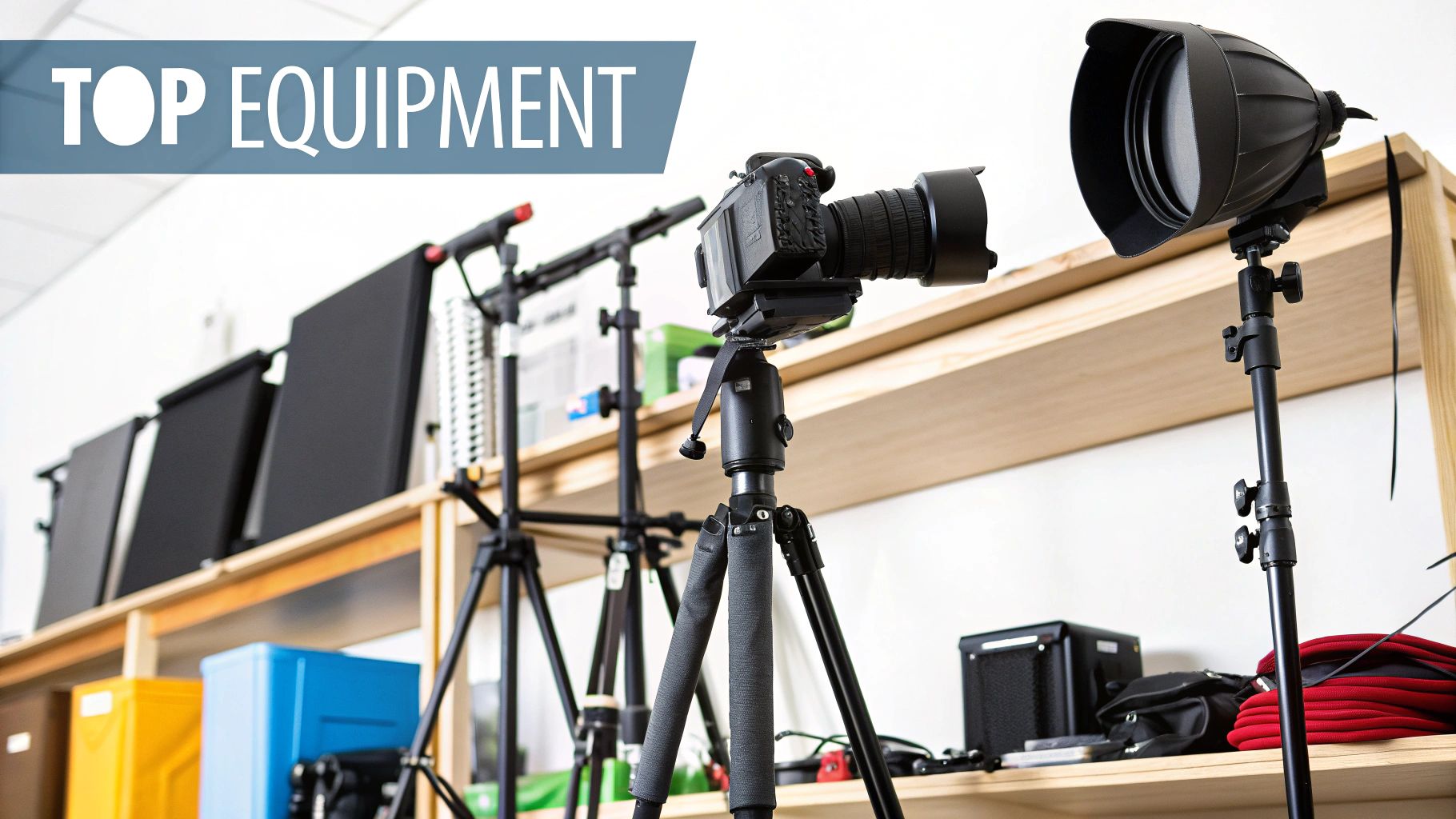
The gear and facilities that come with a studio can genuinely make or break your shoot. Knowing what’s included before you walk in the door means you can spend your time creating, not scrambling to solve problems. It's so important to be crystal clear on what you're getting for your money before you commit.
First up, you need to understand the difference between a 'dry hire' and a 'wet hire'. A dry hire is exactly what it sounds like: you're just renting the four walls. This is often a fantastic choice for seasoned photographers who have their own kit and prefer to work with what they know. It's usually the more budget-friendly route.
On the other hand, a wet or fully-equipped hire provides you with access to the studio’s lighting, backdrops, and other gear. This is a lifesaver if you're travelling light, just starting out in studio work, or want to try out some high-end equipment you don't personally own. Many Melbourne studios offer a hybrid model, letting you hire the space and then add specific gear à la carte.
The Lighting Gear You Can't Live Without
In the studio, light is everything. It's the tool that shapes your entire image, so you need to know what to ask for. Never assume a "fully-equipped" studio has exactly what you need for your specific concept. A good studio will have a clear inventory list on its website; if not, don't be shy about asking for one.
Here’s a quick rundown of what to look for:
Strobes (Flash): These are the workhorses of studio photography, delivering a powerful, instantaneous burst of light. They're the go-to for freezing action and creating crisp, dramatic shots, making them perfect for fashion and commercial portraits.
Continuous Lights: Unlike strobes, these lights stay on, which is incredibly useful. You can see precisely how the light is falling on your subject as you adjust it. They’re absolutely essential for any video work and a huge help for photographers who are still learning the ropes of studio lighting.
Modifiers: These are what you use to shape and control your light. Softboxes give you that beautiful, diffused look, while umbrellas cast a wider, softer light. Then you have things like beauty dishes, which create a punchier, more contrasting light that's incredible for portraiture.
My Two Cents: Before you lock in a booking, find out what brand of equipment the studio uses and ask about its condition. A reputable space invests in reliable gear from brands like Profoto, Godox, or Bowens. If you see old, battered equipment, it’s a big red flag. The last thing you want is a light misfiring mid-shoot.
It's More Than Just Lights and Cameras
The very best Melbourne photography studio hire experiences are about more than just the technical gear. It's the small details and thoughtful amenities that elevate a shoot from a chore into a seamless, professional day for you, your team, and your client.
Think about the creature comforts that make a long day easier:
A dedicated makeup and styling station with great, clean lighting.
A comfortable client lounge or waiting area.
Reliable, high-speed Wi-Fi for tethered shooting or sending files.
A kitchenette with a coffee machine (a non-negotiable for many!) and a fridge.
Easy, ground-floor access for lugging in props and equipment.
A great way to get a feel for a studio's potential is to check out its online gallery. Seeing what others have created there can reveal a lot about the space's versatility. To see what a well-appointed studio can help you achieve, check out [the diverse portfolio of shoots at That Creative Hub](https://www.thatcreativehub.au/gallery). It gives you a real-world glimpse into how the space and its amenities come together. These features are what truly support a smooth workflow, keeping everyone on set happy, focused, and creative.
Making the Booking and Avoiding Hidden Costs
Okay, you’ve found a studio that looks perfect. Now comes the part that can sometimes feel a bit tricky: locking it in without any nasty surprises on the bill later. Getting your head around the booking process and potential costs is key to a stress-free Melbourne photography studio hire.
Most modern studios have made this part incredibly simple. You can usually jump onto their website, see a live calendar of what’s available, and secure your spot right then and there. This direct-to-studio approach is great because it cuts out any middle-man fees that might otherwise bump up the price.
How Studios Typically Charge
In Melbourne, you'll generally come across a few different ways studios price their space. Figuring out which one suits your shoot can save you a fair bit of cash.
Hourly Rates: Got a quick headshot session or a handful of product shots to knock over? An hourly rate is your best friend. It’s flexible and means you only pay for the time you actually need.
Half-Day Rates: This is your sweet spot for slightly bigger projects, like a lifestyle shoot or a small fashion lookbook. A half-day block, usually four hours, almost always works out cheaper than paying for four hours individually.
Full-Day Rates: If you’re planning something more involved—think multiple setups, a big crew, or complex lighting—a full-day hire is the way to go. You’ll get about eight hours, which gives you plenty of breathing room for setup, shooting, and pack-down without constantly watching the clock.
Melbourne’s professional studio scene is part of a massive industry. In fact, Australian Professional Photographic Services is valued at around $1.2 billion. This just shows how much demand there is for top-tier creative spaces. For anyone interested in the numbers, the latest industry report from IBISWorld has all the details.
Keeping an Eye on the Extras
The price you see advertised is often just for the room itself. To create a realistic budget, you have to think about the common add-ons that can pop up. Knowing what these are ahead of time will save you from that sinking feeling when the final invoice arrives.
Here are a few things that might add to your bill:
Background Paper: Studios often charge by the metre if the paper roll gets scuffed or dirty on the floor.
Extra Gear: That special lens or extra C-stand you need might not be part of the standard package. Always check what’s included.
Cleaning Fees: If your shoot involves glitter, food, or a large group of people, you might see a cleaning fee tacked on.
Overtime: This one is a classic. Going even a few minutes over your allotted time can result in overtime fees, which are usually charged at a higher rate.
Before you click confirm, always, always read the fine print in the hire agreement. Look specifically for the cancellation policy and any insurance requirements—most studios will ask for proof of public liability insurance. A quick but thorough read ensures everything is transparent and you can focus on the creative side of things.
If you’re after a simple booking experience where all the costs are laid out clearly from the start, you can easily [check availability and book online](https://www.thatcreativehub.au/book-online) with us.
How to Prepare for a Flawless Studio Shoot
The work you do before you even set foot in a Melbourne photography studio hire is just as important as the shoot itself. A great session rarely happens by accident. It's almost always the result of solid planning, which frees you up to be creative without worrying about logistical nightmares. When you walk in prepared, a day that could be stressful becomes smooth, productive, and honestly, a lot more fun.
Think of your pre-production as the blueprint for the entire project. It's how you get your vision out of your head and into a practical plan, making sure everyone—from the model to the client—is on the same page. This isn't about boxing yourself in. It's about building a strong foundation so you can confidently improvise and capture those magic moments when they pop up.
Build a Practical Shot List and Mood Board
First things first, let's turn those abstract ideas into something tangible. Your mood board is your visual compass. Pull together images, colour palettes, and textures that nail the aesthetic you're chasing. This isn't just a personal exercise; it’s a critical tool for communicating the vibe to your entire team.
Next up is your shot list. This is more than a simple to-do list; it’s your game plan for the day. For every shot you want to get, think about:
The Subject: What's the hero? A specific product, a particular look on the model?
The Angle: Are you going for a tight close-up, a wide environmental shot, or something in between?
The Lighting: What’s the mood? Bright and airy (high-key), dark and dramatic, or soft and dreamy?
The Backdrop: Which seamless paper colour will you need? Will you be using a specific corner of the studio or a prop?
A detailed shot list is your best friend when the clock is ticking. It keeps the shoot moving and makes sure you walk away with all the essential shots you need.
Pre-Plan Your Lighting and Schedule
You don’t need to be a lighting master, but walking in with a basic plan can save you a mountain of time. Look back at your mood board. Is the overall feel bright and commercial, or is it moody and atmospheric? Give the studio manager a heads-up when you book. They’re a fantastic resource and can tell you if the included gear will do the job or if you should think about hiring extra modifiers for a specific look.
Your schedule is your roadmap for the day, and one of the most common mistakes I see is people underestimating how long everything really takes. A realistic timeline is the difference between a calm, creative flow and a frantic scramble at the end of your session.
Pro Tip: Block out your schedule. Pencil in specific times for team arrival, gear setup, the first look, a lunch break, the final look, and—crucially—packing down. A full-day hire might feel like a lifetime, but those hours fly by. Building in a 15-20 minute buffer between big changes can be an absolute lifesaver.
Coordinate Your Team and Logistics
A smooth shoot is a team sport. A week or two out from the session, lock in the call times with your models, makeup artists, stylists, and any clients who’ll be on set. Send out a clear, simple call sheet with all the essentials: the studio address, parking details, your mobile number, and a link to the mood board.
Don't forget the little things that make a big difference. Have you sorted out coffee and lunch? Got the Wi-Fi password ready for tethering? Do you know who to call if a piece of studio equipment plays up? Nailing these small details beforehand means you can pour all your energy into creating incredible images on the day. That level of organisation shows your clients and team that you're a pro, setting the tone for a successful shoot from the very beginning.
How to Make the Most of Your DIY Studio Experience at That Creative Hub
At That Creative Hub, we’re all about empowering you to create — whether you’re a seasoned pro or just starting out. Our spaces are designed to be plug-and-play, but we’re always here to support behind the scenes.
Using the Cyclorama Studio?
Bring your own camera and crew or ask us to connect you with a trusted photographer or videographer from our network. If you’re new to lighting or unsure how to get started, we can guide you through what you need or step in with setup support. The goal is to make it easy for you to walk in and create confidently.
Podcast Studio Access
For podcast users, we offer a fully-equipped, ever-evolving set with a dedicated production manager on-site. Whether you’re filming an interview, a solo series, or a branded piece of content, we can help set the vibe and adjust the layout to suit your vision. The set is flexible, the gear is high-quality, and the support is here if you need it. Our dedicated podcast studio is ready for your next project.
Need Help? Just Ask
Can’t get a crew together? Let us handle it. We act as a concierge service for creators, linking you with the right people and tools to bring your vision to life. From photographers to editors, lighting setups to sound checks — we’ve got you.
Ultimately, a proactive mindset pays off. Don’t wait until you're stressed and behind schedule to ask for a hand. This approach is becoming even more critical as our industry grows. The broader Australian photography services market is projected to expand at an annual rate of 5.8% through 2033, fuelled by new tech and the ever-growing hunger for digital content. If you're interested in the data, you can read the full Australia photography services market report to see where things are headed. This growth means studios are better equipped than ever to offer the comprehensive support you need to bring your vision to life.
Common Questions About Studio Hire in Melbourne
We get asked a lot of the same questions by creatives, so we've put together some quick, practical answers. Think of this as a cheat sheet to help you dodge common hurdles and make sure you're getting real value from your hire.
What Is the Typical Cost to Hire a Studio in Melbourne?
Studio hire rates in Melbourne are all over the map, really. It all comes down to the studio's size, where it is, and what gear is included. Finding the sweet spot that fits your budget and your project's needs is key.
Here’s a rough guide to what you can expect to pay:
Small, basic studios often start around $50-$80 per hour. These are perfect for straightforward headshots or simple product photography.
Mid-range, well-equipped studios usually hover between $80-$150 per hour. You'll typically get more space and some included lighting gear.
Large professional studios with big features like a cyclorama wall can go from $150 to over $300 per hour.
A pro tip? Always look for half-day (four hours) or full-day (eight hours) packages. They almost always work out cheaper than booking hourly. Before you lock anything in, just make sure you clarify if GST is included and ask if there are any other potential costs.
Do I Need My Own Insurance to Rent a Photo Studio?
Yes, almost certainly. Having your own public liability insurance is a standard requirement for most professional studios, and honestly, it’s just good practice. This insurance is there to protect you and the studio if any accidental damage happens to the space or the equipment.
Key Insight: Think of public liability insurance as your professional safety net. If you plan on shooting regularly, getting an annual policy is one of the smartest and most cost-effective moves you can make. It gives everyone peace of mind.
For a one-off shoot, some studios might offer an in-house damage waiver for a small fee, which can be a decent option. Just be sure to read the rental agreement’s insurance clauses carefully before you commit.
What Is a Cyclorama Wall and Do I Really Need One?
A cyclorama, or 'cyc' wall as you'll hear it called, is basically a curved wall that blends seamlessly into the floor. The whole point is to get rid of corners and lines, creating what looks like an endless, clean background.
You'll definitely want a cyc wall for certain jobs that demand that polished, professional look. It's the go-to for:
High-end fashion and editorial shoots
E-commerce product photos where the product is the hero
Commercial video production and corporate interviews
But is it essential? Not always. If your shoot has more of a lifestyle vibe or you're using lots of props and textures to build a scene, a cyc wall might be a much better fit. A well-styled corner or a simple paper backdrop could be a much better fit.
Can I Bring My Own Lighting Equipment?
Absolutely. Every studio worth its salt expects photographers and videographers to bring their own gear. It's completely normal for creatives to have a specific kit they know inside and out and prefer to work with.
It's just good etiquette to give the studio a heads-up on what you're bringing, particularly if it's a lot of gear. This just helps them prep the space for you.
That said, if the studio hire includes their in-house equipment, it's worth considering. Using their gear can save you a massive amount of hassle—no packing, lugging, and setting up your own stuff. It’s also a brilliant way to test out professional-grade equipment without having to buy it yourself.
If you have more questions or want to get into the nitty-gritty of what a studio offers, your first stop should always be their website. For more answers, you can explore the comprehensive FAQ section on our site: https://www.thatcreativehub.au/faq-s.
Article created using [Outrank](https://outrank.so)
Comments