
Best DJ Studio Melbourne | Book Your Perfect Space Today
If you're looking for a DJ studio in Melbourne, you're in the right place. The city is bursting with options, from stripped-back practice rooms to full-blown professional recording spaces. It's a proper hub for electronic music, which means there's a spot for every skill level and budget, whether you're polishing a set, recording a new mix, or just getting your bearings.
Why Is Melbourne Such a Hotspot for DJs?
Melbourne's standing as a powerhouse in electronic music isn't just a recent trend; it's built on decades of history that have shaped its incredible culture. This unique energy makes it the perfect city for DJs to experiment, grow, and plug into a really passionate community.
The whole scene has deep roots, stretching all the way back to the early 90s underground rave culture. Taking a lot of inspiration from what was happening in London at the time, Melbourne quickly became a key player in the Aussie electronic music landscape. Even back then, with only a handful of DJs on the scene, the city’s nightclubs were already embracing fresh electronic sounds, setting the stage for what was to come. That rebellious, innovative spirit is still alive and well today. You can dive deeper into the birth of Melbourne's rave scene over on Vice.com.
So, What Can You Expect From a Local Studio?
When you start your search, you'll quickly realise that "DJ studio" can mean a lot of different things. Knowing what's on offer will help you pick the right space for what you're trying to achieve.
Hiring a local studio comes with some serious perks:
Access to Pro-Grade Equipment: This is a big one. You get to play on industry-standard gear like Pioneer CDJ-3000s and a DJM-V10 mixer without forking out thousands of dollars to buy it yourself.
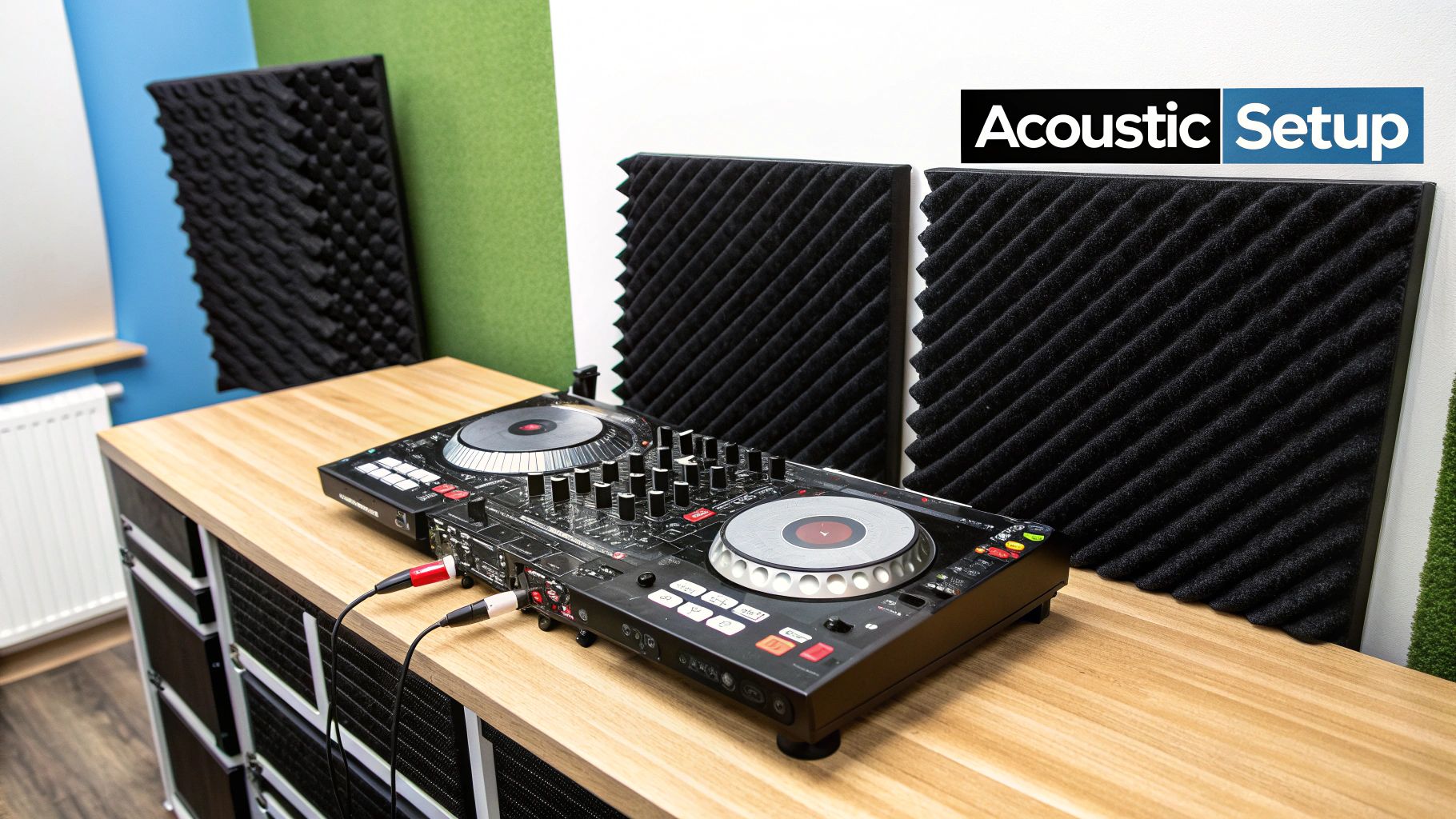
Acoustically Treated Rooms: Ever tried mixing in a room with bad acoustics? It's a nightmare. Proper studios are sound-optimised, so you can actually hear every little detail, making sure your transitions are seamless and your EQs are spot-on.
A Place to Connect: Many studios are more than just rooms; they're community hubs. It's a great way to bump into other DJs, producers, and people in the industry.
A professional studio strips away all the distractions. You're not worried about noise complaints or technical glitches. It's just you and the music, giving you the perfect space to nail those tricky transitions, test out new tracks, and build real confidence behind the decks.
Evaluate Key Features of a DJ Studio
When you're looking for the right DJ studio Melbourne has on offer, it’s easy to get fixated on the hourly rate. But trust me, the real value isn't found in the cheapest price—it's in finding a space whose features align perfectly with what you need to achieve. A great studio can spark new ideas, while a poorly equipped one will just kill your vibe.
Think about it like this: you wouldn't rock up to a gig with the wrong gear, right? The same principle applies to where you practise. The quality of the decks, the mixer's versatility, and the room's acoustic treatment are absolutely crucial. I know a DJ who spent weeks in a budget spot, thinking his mixes were perfect. When he finally played them in a club, the bass was all wrong. His tracks sounded great in that room, but fell completely flat on a proper system.
It's a classic mistake. If you don't have accurate monitors and decent sound treatment, you're essentially mixing with a blindfold on. What sounds perfectly balanced in an untreated room can turn into a muddy mess when played anywhere else.
Beyond the Basics: What Really Matters
The tech specs are your starting point, but the overall experience is what sets a great studio apart. You should also be looking for the little things that support your creative workflow. Is there a chill-out area where you can step back, clear your head, and listen to your mix with fresh ears? What about on-site support if a piece of gear suddenly acts up?
These details seem minor, but they make a huge difference. You want to walk into a space where your only focus is the music—not hunting for a spare cable or trying to troubleshoot a dodgy connection. A well-managed studio anticipates these things so you don’t have to.
The ultimate goal is to find a space that feels like an extension of your own creative toolkit. It should remove roadblocks, not put them in your way. When the environment is right, you're free to experiment and push your skills with total confidence.
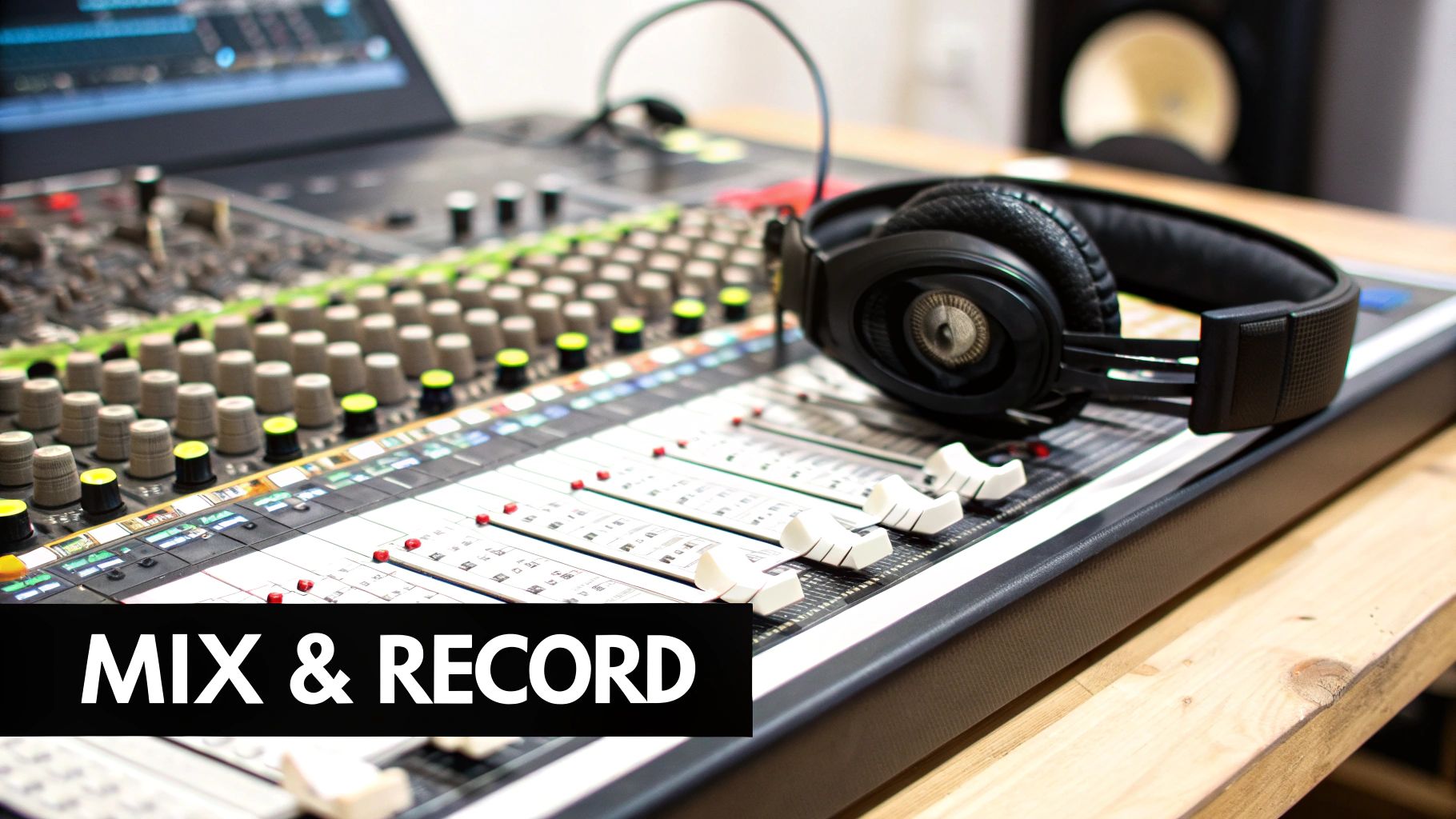
Also, don't forget to check out the recording and livestreaming options. Heaps of DJs use their studio time to record sets for SoundCloud, Mixcloud, or even to stream live to their followers. A studio with high-quality, direct-from-mixer recording or a ready-to-go streaming setup can be a massive time-saver. It’s a brilliant way to create polished content while you're already in the zone.
Breaking Down the Cost of Pro Gear
To really get why studio hire is such a good deal, you need to understand the true cost of the equipment you're getting access to. This is where the real value lies.
This table is a handy checklist to use when you're comparing studios. It breaks down the essential features and explains why they're so important for getting a professional result.
DJ Studio Feature Checklist
Feature | What to Check For | Why It Matters |
|---|---|---|
DJ Decks | Industry-standard models like Pioneer CDJ-3000s. Are they well-maintained? | You need to practise on the same gear you'll find in clubs. It builds muscle memory and ensures a smooth transition to a live gig. |
Mixer | Look for a versatile mixer like the Pioneer DJM-A9 or DJM-V10. Check for clean faders and responsive EQs. | A high-quality mixer is the heart of your setup. It gives you precise control over your sound and creative effects. |
Monitors | Accurate studio monitors (e.g., KRK, Yamaha). Are they positioned correctly for optimal listening? | This is non-negotiable. Accurate monitors let you hear your mix exactly as it is, so you can make informed decisions. |
Acoustic Treatment | Look for sound-absorbing panels, bass traps, and diffusers on the walls and ceiling. | Proper treatment prevents sound from bouncing around the room, which stops misleading echoes and ensures what you hear is true. |
Recording/Streaming | Is there a simple way to record high-quality audio directly from the mixer? Are there cameras or streaming software available? | This turns your practice session into content creation. It's an efficient way to build your portfolio or connect with your audience. |
Having a solid checklist helps you move beyond just the price tag and focus on what will actually help you improve.
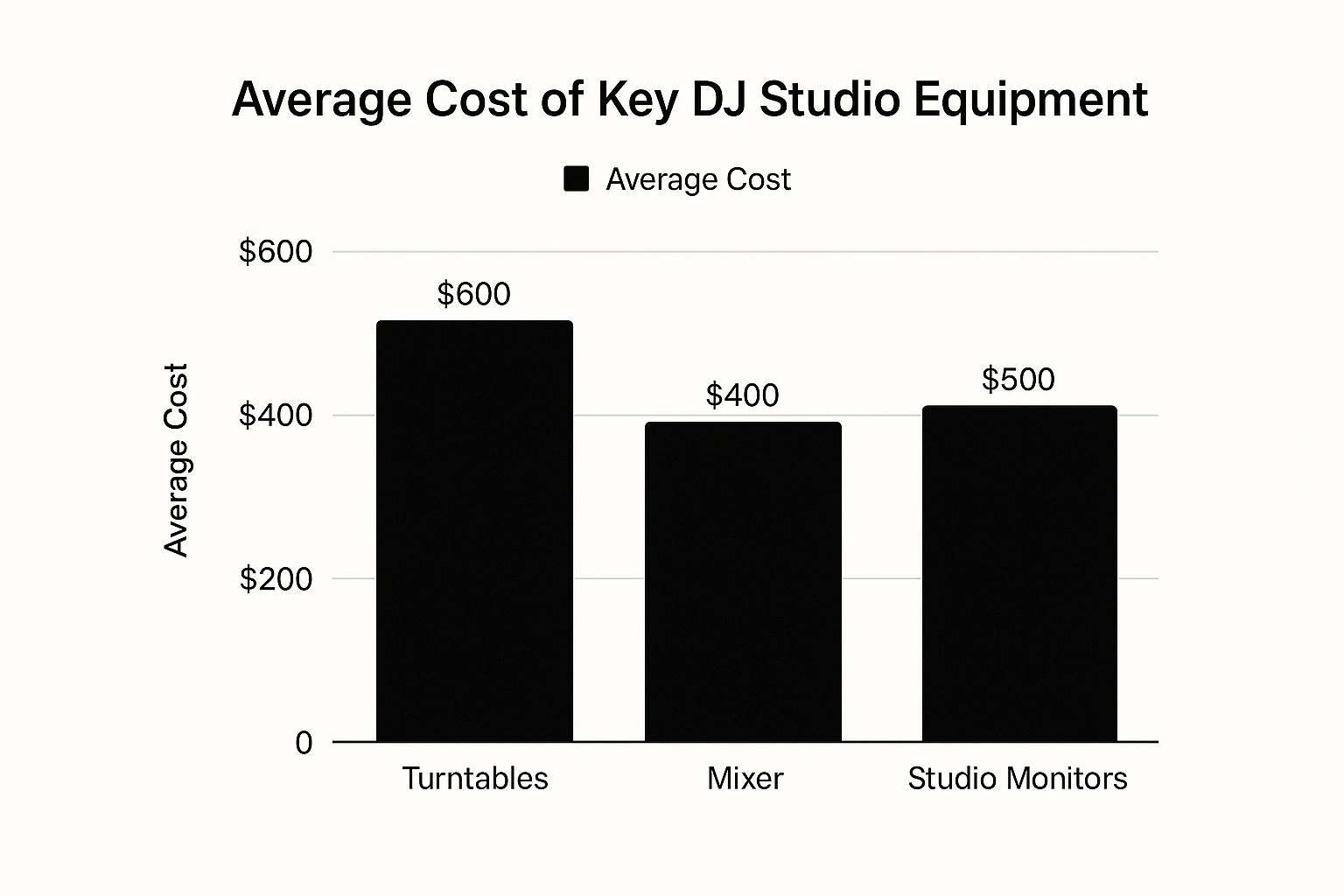
When you see the numbers laid out, it's clear that the initial investment for professional equipment is huge. This is what makes hiring a studio such a smart, cost-effective way to get your hands on the best gear in the business.
For a more detailed look at maximising your studio time, check out our guide to music studio hire for flawless tracks, which covers everything from how to prepare to how to perform.
Plan Your Ideal Studio Session
Booking time at one of the professional DJ studios Melbourne offers is a massive step, but the real magic happens when you show up ready to go. Walking in with a clear plan is the difference between a productive session and a waste of money. It ensures you spend your time actually mixing, not just staring at a chaotic music library wondering where to start.
Before you even think about packing your bag, get your digital house in order. This all starts with organising your music library in software like Rekordbox or Serato. Don't just dump a bunch of new tracks into one folder. Build structured playlists that tell a story or explore a specific vibe. Think in terms of "Peak-Time Techno," "Warm-Up House," or even "Experimental Transitions."
Once you've got your playlists, it's time to set your cue and loop points. Honestly, this is a non-negotiable step if you want a fluid mix. By marking the perfect drop, a clean vocal intro, or a tight 8-bar loop beforehand, you take all the guesswork out of your session. This is what really separates the pros from the amateurs—the ability to execute complex ideas smoothly because the groundwork is already done.
Prepping Your Gear and Setting Goals
With your digital library sorted, it's time to get your physical gear together. Nothing kills the creative flow faster than realising you've left a crucial cable or your favourite headphones at home. I’ve been there, and it’s frustrating. A simple checklist can be a lifesaver.
At a minimum, your packing list should always include:
High-Quality Over-Ear Headphones: The studio monitors are great for feeling the room, but your headphones are essential for precise cueing and beatmatching.
Prepared USB Sticks: Bring at least two. Make sure they’re both analysed in your DJ software. You never know when one might fail, and a backup is an absolute must.
Spare Cables: It's always a good idea to pack extra RCA and USB cables. Even the best studios can have a faulty cable, and having your own saves you from technical headaches.
Laptop and Stand: If you’re using a laptop, a sturdy stand will position it at eye level. This saves your back and keeps your whole setup looking clean and organised.
The final piece of the puzzle is setting a clear objective for your session. What, exactly, do you want to accomplish? Vague goals just lead to wasted time. Instead of just "practising," get specific.
Your goal could be as focused as "record a 60-minute mix with seamless transitions between melodic techno and progressive house" or "master three new mixing techniques I’ve been studying." Having a clear mission turns a casual jam into a focused training exercise.
For instance, you might decide to focus entirely on refining your use of effects, maybe experimenting with the filter and reverb on a Pioneer mixer. Or perhaps you want to record a high-energy set for a live stream, practising your track selection and energy management. Knowing your purpose before you arrive at the DJ studio ensures you walk out with something tangible to show for your time and money.
If you're looking for a few more pointers on what to bring, check out Your Ultimate DJ Booth Hire Guide for a deeper dive.
Tap into Melbourne's Music Production Legacy
Melbourne's rep as a global hotspot for electronic music didn't just happen overnight. The city’s unique sound is built on decades of studio innovation, a rich history that still echoes in the spaces where DJs practise and create today. Getting to grips with this legacy doesn't just give you a deeper connection to the local scene; it gives you real-world insights that can genuinely lift your mixes to another level.
The core principles perfected in Melbourne’s legendary recording studios—everything from mic placement to acoustic design—set the standard for what a professional DJ studio Melbourne should be. These early breakthroughs in audio clarity and sound engineering are the bedrock of the city's sonic identity, long before digital took over.
The Analogue Roots of Modern Mixing
Before software and digital controllers became the norm, Melbourne's sound was sculpted in analogue studios. One of the most important was Armstrong Studios, kicked off by Bill Armstrong in a South Melbourne terrace house way back in 1965. By 1968, the studio had installed one of Australia's first 8-track recorders, a game-changing move that put Melbourne at the very heart of the country's music industry.
This tech drew in huge acts like The Easybeats, John Farnham, and Little River Band, cementing the city's reputation as a recording powerhouse. You can dive deeper into this pivotal era and learn about Melbourne's most influential recording studios to get the full story.
So, why does this history matter to a DJ today? Because the problems those engineers solved—like managing tape saturation to add warmth or designing rooms for clean recordings—are the very foundations of modern audio production. When you tweak the gain on your digital mixer to avoid clipping, you're essentially applying the same principles they used to stop tape from distorting.
Understanding the analogue heritage of music production gives you a massive advantage. It helps you appreciate why certain EQs sound warmer, why acoustic treatment is so crucial, and how to add real character to your digital mixes with purpose.
How to Use These Lessons in Your Next Session
So, how do you take this history and apply it to your next DJ session? It starts with paying close attention to the studio's acoustics and the unique character of the gear.
Actually *Listen* to the Room: Before you even think about hitting play, just listen to the silence. A well-treated studio, one that takes cues from classic designs, will feel controlled and clear. This is what allows you to hear every single detail in your mix.
Experiment with Your Gain: Don’t just focus on keeping your levels out of the red. Play around with the gain staging on the mixer. Pushing the channel gain a little can introduce a subtle warmth that feels a lot like old-school analogue saturation, giving your tracks more body and presence.
Think About Space and Depth: Early producers were masters of creating a sense of space with reverb and delay. Don't just see the effects on your mixer as flashy tricks. Use them to build atmosphere and add depth to your transitions, the same way they did on all those classic records.
When you connect with this legacy, you’re not just renting a room; you’re tapping into a deep well of creative history. For anyone looking to build their skills from the ground up, our guide on the top DJ training schools in Melbourne for 2025 is a fantastic place to start.
Why That Creative Hub is More Than Just a DJ Booth
Booking a standard practice room is one thing. Finding a space that genuinely empowers you to create is another beast altogether. At That Creative Hub, we’re all about empowering you to create—whether you’re a seasoned pro or just starting out. Our spaces are designed to be plug-and-play, but we’re always here to support behind the scenes.
A top-tier DJ studio in Melbourne shouldn't just be about decks and speakers; it needs to be a place where ideas can come to life. This is exactly where our multi-purpose space shines, turning a simple DJ session into a chance to create some seriously polished content.
Think Beyond the Mix: How to Make the Most of Your DIY Studio Experience
What if you could record your next killer mix and, at the same time, shoot high-quality video for your socials? At That Creative Hub, that’s not some far-fetched dream—it’s just another Tuesday. Our studio is built to handle more than just audio, giving you the tools to build your entire brand under one roof.
Using the Cyclorama Studio? Bring your own camera and crew or ask us to connect you with a trusted photographer or videographer from our network. If you’re new to lighting or unsure how to get started, we can guide you through what you need or step in with setup support. The goal is to make it easy for you to walk in and create confidently.
Podcast Studio Access: For podcast users, we offer a fully-equipped, ever-evolving set with a dedicated production manager on-site. Whether you’re filming an interview, a solo series, or a branded piece of content, we can help set the vibe and adjust the layout to suit your vision. The set is flexible, the gear is high-quality, and the support is here if you need it.
Plug-and-Play Freedom with a Pro Helping Hand
The whole idea is to make professional gear accessible without the intimidating learning curve. You can walk in, connect your equipment, and feel confident you’re ready to go. But “DIY” doesn’t mean you’re left to fend for yourself.
Need Help? Just Ask. Can’t get a crew together? Let us handle it. We act as a concierge service for creators, linking you with the right people and tools to bring your vision to life. From photographers to editors, lighting setups to sound checks — we’ve got you.
This support becomes incredibly valuable when you’re ready to level up a project. A local producer recently used the Podcast Studio to live-stream a high-energy set. With our production manager on-site, they sorted out a slick multi-camera setup and dynamic lighting without breaking a sweat. The result? A pro-level performance that reached a massive online audience.
Ultimately, this hands-on approach means you can achieve a level of production quality that might feel out of reach otherwise. It’s all about knocking down barriers and giving you the tools—and the people—to bring your ideas to life. For any DJ in Melbourne looking to do more than just mix, it’s a game-changer.
Get to Know Melbourne's Sound System Culture
If you've ever played a gig in Melbourne, you know the feeling of a properly tuned rig hitting you right in the chest. That immense, dancefloor-shaking power isn't just a happy accident. It's the standard, and it's a standard that’s perfected in purpose-built DJ studios. The city’s unique sound system culture has set the bar high for audio quality, and that directly shapes what DJs should be looking for in a practice space.
This culture is about so much more than just big speakers. Over the last decade, Melbourne has become a hotspot for custom-built sound systems, with dedicated crews obsessed with audio perfection. This grassroots movement has produced over a dozen unique rigs, like the pioneering Adrian’s Wall Sound System, which first hit the scene back in 2012.
Because of this intense focus on high-fidelity sound, your studio sessions need to be more than just mixing tracks. This is your chance to really understand how your set will sound—and feel—on a massive, venue-sized system.
Making Your Studio Sound Hit Hard in the Club
The whole point of using a professional studio is to critically listen to your sound. A mix that sounds flawless on your bedroom monitors can completely fall apart on a massive club rig if the low-end isn’t properly dialled in. You need a studio with accurate monitoring and well-placed speakers to hear what’s really going on.
When you're in a proper studio, zoom in on these key areas:
Test your bass response. Seriously, get forensic with your low frequencies. Are the kick drums punchy and defined, or are they a muddy mess? A good studio will let you hear the separation between your basslines and kicks with absolute clarity.
Check your dynamic range. Listen to the life in your tracks. A club system mercilessly exposes any lazy compression, so make sure your mix has enough dynamic range to feel powerful without sounding squashed and lifeless.
Analyse the stereo image. Don't just stay glued to the sweet spot. Walk around the room a bit. A well-balanced mix should sound solid and consistent from different listening points, which is a great sign it will fill a bigger space properly.
Embracing Melbourne’s sound system culture means treating every practice session like a dress rehearsal for the main event. It’s about crafting a mix that doesn’t just sound good in your headphones—it has the weight, clarity, and energy to command a dancefloor.
Tweaking Your Mix for Different Venues
Finally, always remember that every room has its own sound. A mix that’s been polished for a small, intimate bar will need some serious tweaking before it's ready for a huge warehouse rave. Use your studio time to experiment.
Try making different versions of your mix for different scenarios, or at least get a feel for how you might need to adjust your EQs on the fly.
By starting to think like a sound engineer during your practice, every session you book at a DJ studio in Melbourne becomes a direct investment in your live performance. You’re bridging that crucial gap between practice and performance, ensuring you’re ready to deliver a set that truly honours the city’s deep-rooted audio culture.
Got Questions? We've Got Answers
Stepping into the world of DJ studios can feel a bit daunting, especially the first time around. You’ve probably got a heap of questions buzzing around. Let's clear up some of the most common things DJs ask when they're hunting for the right space in Melbourne.
What’s the Going Rate for a DJ Studio in Melbourne?
Studio hire rates can be all over the place, really. It depends on where you are, what gear they've got, and how long you need it for. For a basic practice room, you're probably looking at something around $30 an hour.
If you want to get your hands on the really good stuff – think a full setup with Pioneer CDJ-3000s and a DJM-V10 mixer – then you’ll be looking closer to the $70 per hour mark. A good tip is to ask about block booking discounts or memberships. If you know you'll be a regular, it can save you a fair bit of cash in the long run.
Should I Pack My Own Gear?
For the most part, no. A proper studio will have all the industry-standard equipment set up and ready to go. You really only need to bring your essentials.
That means your headphones, your USBs (and seriously, always bring a backup!), and maybe your laptop if that's how you roll. It’s always smart to double-check what’s included before you lock in your time, though. If you have a specific controller or effects unit you can’t live without, ask if they have it or just plan on bringing it yourself. Nothing worse than a last-minute surprise!
Can I Record My Set There?
Yep, recording your mix is one of the main reasons to book a studio in the first place. Most quality spots in Melbourne offer this. The setup can vary, from a simple, clean audio recording straight out of the mixer to a more complex rig with a dedicated audio interface for top-notch quality.
Some studios even have an engineer who can help you get a polished final product. Just be sure to ask about their recording options and if there are any extra costs involved for things like mastering when you make your booking.
Are There Any Beginner-Friendly Studios in Melbourne?
Definitely! Melbourne's DJ scene is super supportive of newcomers. You don't have to be headlining festivals to book a studio session.
Look for places that have a reputation for being friendly and helpful. A studio like That Creative Hub, for instance, is perfect for this. They've got plug-and-play setups that are easy to get the hang of, and there's usually someone around to give you a hand. It’s all about creating an environment where you can feel comfortable, build your confidence, and just focus on the music.
Ready to move beyond bedroom practice and start making some serious noise? At That Creative Hub, we've got the gear, the space, and the vibe to help you nail your next mix. See for yourself how a pro setup can lift your game.
Comments